


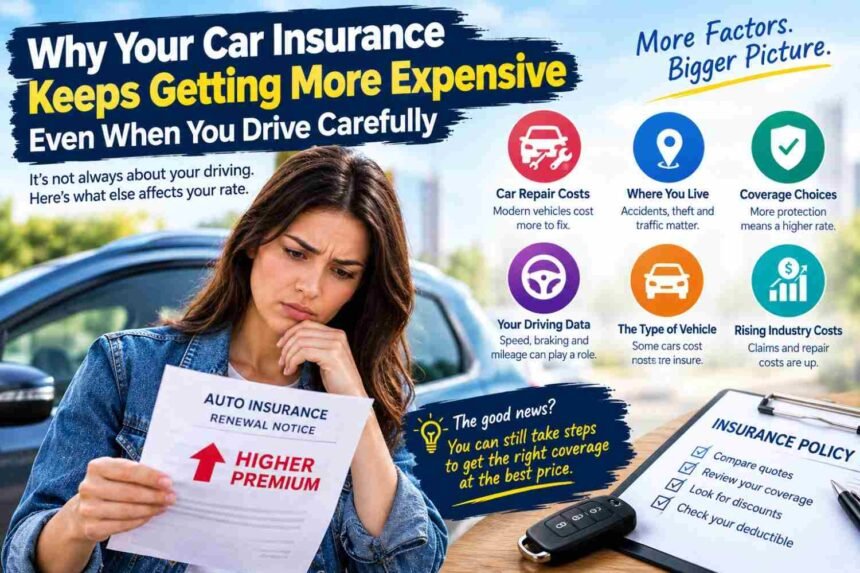
You open your car insurance renewal notice expecting roughly the same bill as last year. Instead, the number is higher. You haven’t caused an accident, your driving record is clean, and you haven’t made a claim. So what changed?
For many American drivers, the answer is that car insurance pricing is influenced by far more than their personal driving history. Insurers consider a combination of factors, including where the vehicle is driven, the type of car, mileage, claims history, selected coverage, deductibles and other characteristics.
Your Car May Be More Expensive to Repair Than You Think
Modern vehicles can contain cameras, sensors, electronic safety systems and other technology that can make repairs more complicated. The cost of repairing a vehicle is one of the factors insurers consider when determining premiums, along with the vehicle’s price, safety record and theft risk.
That means a relatively minor crash isn’t necessarily a minor insurance claim. Damage to a bumper, for example, can sometimes involve components or technology that aren’t obvious from the outside. When the cost of repairing vehicles rises, insurers may have to account for those higher claim expenses when setting rates.
Even Drivers Who Never File a Claim Can Feel the Impact
Insurance works by pooling risk across many policyholders. Your own claims history matters, but it isn’t the only thing affecting the price of coverage. Weather, accident rates, traffic density, vehicle theft, medical expenses, legal costs and auto repair costs can all contribute to differences in insurance costs across states and even between communities.
That helps explain one of the most frustrating situations for drivers: you can do everything right behind the wheel and still receive a higher renewal quote. The change may reflect broader claims costs and market conditions rather than a new mistake on your part.
Where You Live Can Make a Surprisingly Big Difference
Two drivers with similar cars and similar driving histories can pay very different amounts depending on where they live. Location is one of the rating factors identified by the National Association of Insurance Commissioners, along with factors such as age, driving record, vehicle use, mileage, coverage selections and deductibles.
The difference can be especially noticeable between areas with different traffic levels, accident frequency, theft rates, weather exposure and repair costs. A move to a new city or even a different part of a state can therefore change an insurance quote.
Insurance Costs Have Been Rising
This isn’t just something individual drivers are imagining. According to the Insurance Information Institute, motor vehicle insurance costs for U.S. urban consumers increased 6.0% during 2025, according to Bureau of Labor Statistics consumer-price data. The same source reports that average U.S. auto insurance expenditure reached $1,282 in 2023, the latest year available in that dataset.
The broader market has also gone through a period of substantial premium increases. Triple-I reported that U.S. personal auto insurance premium growth reached 14.4% in 2023 and 12.8% in 2024 before the market’s underwriting performance improved in 2025.
Your Driving Data Could Also Play a Role
Some insurers use telematics programs that collect information about driving behavior. Depending on the program, the data can include things such as miles driven, braking, acceleration, speeding, time of day and other driving patterns.
For drivers considering these programs, it is important to understand exactly what information is collected, how it is used and how the program affects pricing. A telematics program isn’t simply about having a “good” or “bad” driver score; the details vary by insurer and program.
The Coverage You Choose Changes the Price
Sometimes a higher bill isn’t caused by a change in risk at all. It can come from the policy itself.
The amount and type of coverage you purchase, along with your deductibles, are important components of your premium. Choosing broader protection or a lower deductible generally changes the amount you pay for the policy.
That is why comparing two insurance quotes based only on the final monthly price can be misleading. A cheaper policy may have different limits, deductibles or coverage that doesn’t provide the same protection.
The Car You Buy Can Matter Before You Even Leave the Dealership
If you’re shopping for a vehicle, insurance should be part of the calculation before signing the paperwork. Insurers consider factors associated with the vehicle itself, including repair costs, safety characteristics and the likelihood of theft.
The purchase price of a car therefore isn’t necessarily a good estimate of what it will cost to insure. Two vehicles with similar sticker prices can have different insurance costs because insurers assess their risks differently.
So What Can Drivers Actually Do?
The first step is to understand what you’re paying for. When your premium changes, review your coverage, deductibles, vehicle information, mileage and other policy details rather than assuming the increase is unavoidable.
It can also make sense to compare quotes from multiple insurers using the same coverage limits and deductibles. Triple-I recommends comparing policies carefully rather than shopping solely by price, because the cheapest quote isn’t necessarily offering identical protection.
You can also ask your insurer whether you qualify for discounts or whether a different coverage structure makes sense for your situation. Available discounts and insurance rules vary by state and insurer, so there isn’t one universal formula that works for every driver.
The Question to Ask Before You Renew
A higher insurance bill can be frustrating, especially when you haven’t had an accident. But the number on your renewal notice is the result of a much larger calculation involving the driver, vehicle, coverage and the insurance environment around you.
Instead of asking only, “Why did my rate go up?”, consider asking a more useful question:
“Am I still getting the coverage I need at a competitive price?”
That shift can turn a confusing renewal notice into an opportunity to review your policy, compare alternatives and make sure your insurance still fits your needs.
After all, being a careful driver is important—but your driving record is only one piece of the insurance puzzle.