Most people don’t think much about their insurance policy until something goes wrong. You pay the premium every month, keep the documents somewhere safe, and assume you’re protected when you need it. But there is an uncomfortable detail that many policyholders discover only after filing a claim: having insurance doesn’t necessarily mean every loss will be covered.
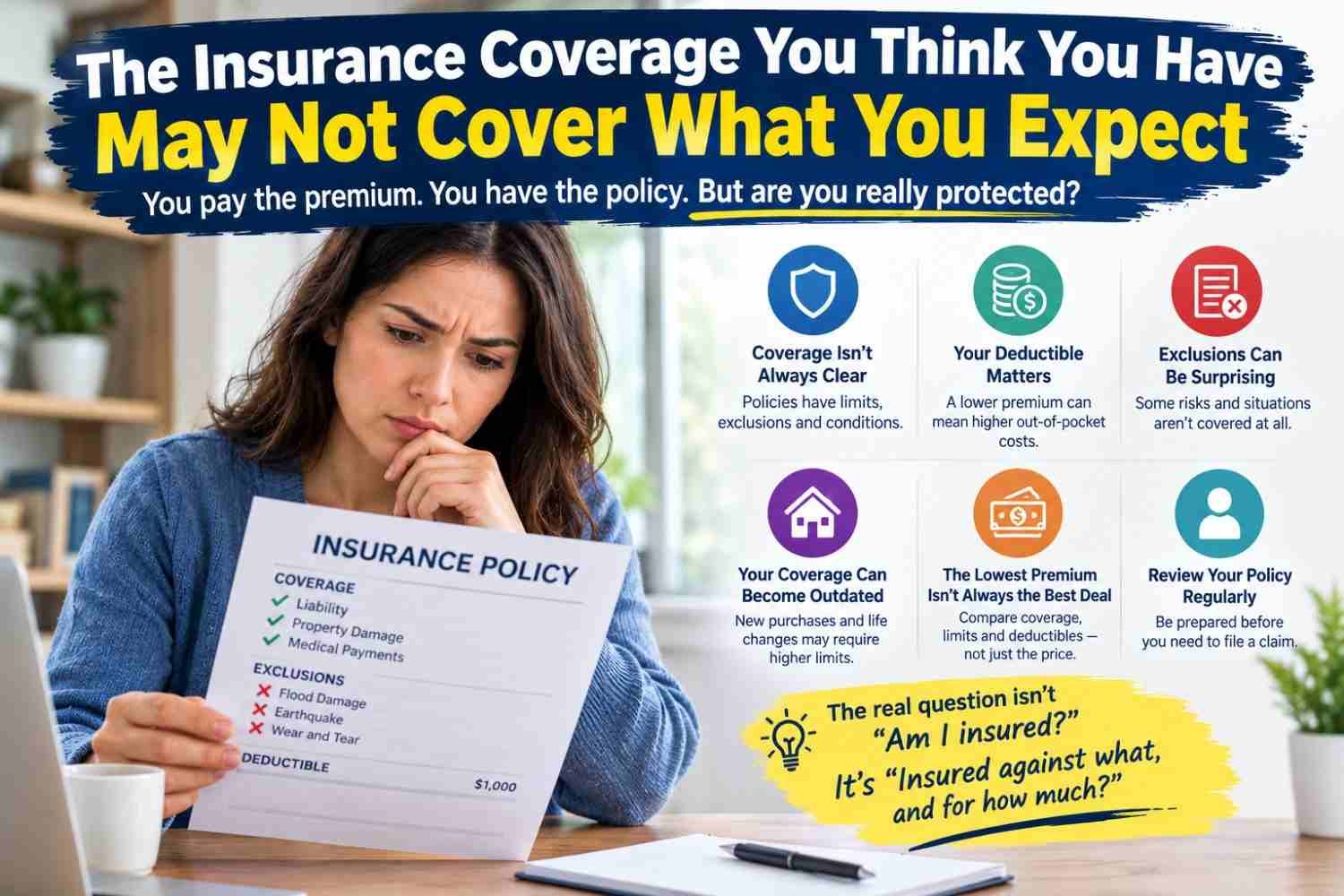
The real protection comes from understanding exactly what your policy covers, what it excludes, how much the insurer may pay, and what you may have to pay yourself. Two people can both say they have “full coverage” while having policies with very different protections.
The Phrase “Fully Insured” Can Be Misleading
People often use the phrase “fully insured” as though it describes a specific level of protection. In reality, insurance coverage is usually made up of individual coverages, limits, deductibles and exclusions. There isn’t a single universal package that covers everything that could possibly happen.
For example, an auto policy can contain liability coverage as well as coverage for damage to the insured vehicle, depending on the policy. A homeowners policy can cover certain types of property damage while excluding particular causes of loss or applying special limits to certain belongings.

That’s why the name of an insurance policy tells you much less than the actual policy documents.
The Deductible Is the Part You Feel First
A deductible is the amount you are generally responsible for paying before an insurer pays a covered claim, subject to the specific terms of the policy. Choosing a higher deductible can reduce the premium in some situations, but it also means accepting more out-of-pocket expense if you have a covered loss.
This creates an important trade-off. A policy with a lower premium may look attractive when everything is going well, but the financial impact can be different when a claim occurs. Before choosing a deductible, it is worth considering whether you could comfortably handle that expense if something unexpected happened.
Exclusions Can Be More Important Than the Fine Print
The most surprising part of an insurance policy may not be what it covers, but what it doesn’t cover. Exclusions define situations, causes of loss, property or circumstances for which the policy does not provide coverage, although the exact rules depend on the type of insurance and the policy wording.
This is particularly important because people tend to remember the broad promise of protection rather than the specific conditions attached to it. “My house is insured” sounds simple, but the actual question is much more specific: insured against what, for how much, under which conditions and with what exclusions?
The Value of Your Property Can Change Faster Than Your Policy
Imagine buying a policy several years ago based on the value of your possessions at that time. Since then, you may have purchased a new television, laptop, furniture, jewelry, appliances or other expensive items.
If your coverage hasn’t been reviewed, your policy may no longer reflect your current situation.
The same issue can occur with vehicles, homes, businesses and other insured property. Major purchases, renovations, changes in usage or other life changes can all be reasons to review whether the existing coverage still makes sense.
Your Policy Limit Matters
Another detail that can be overlooked is the policy limit. Insurance doesn’t necessarily mean an insurer will pay an unlimited amount for a covered loss. Policies commonly contain specific maximum amounts for different types of claims or property.
That means a policy can technically provide coverage while still leaving you responsible for costs beyond the applicable limit.
This is one reason comparing policies based only on the premium can produce an incomplete picture. Two policies can have similar prices but different limits, deductibles and exclusions.
Cheap Insurance Can Become Expensive After a Claim
Choosing the lowest premium isn’t necessarily the same thing as choosing the lowest overall cost. A cheaper policy may have different deductibles, limits or coverage options that affect what happens after a loss.
The right comparison is therefore not simply, “Which policy costs less every month?” A more useful question is, “What protection am I actually receiving for that premium?”
That distinction becomes especially important when comparing quotes from different insurers. The policies should be compared using similar coverage levels and deductibles rather than looking only at the final price.
Life Changes Can Create Insurance Gaps
Insurance needs can change as your circumstances change. Getting married, buying a home, having children, starting a business, purchasing a different vehicle or taking on new responsibilities can all affect the type or amount of coverage that makes sense.
A policy that was appropriate several years ago may not necessarily be appropriate today.
That’s why an insurance review doesn’t have to wait until renewal time. Major changes in your financial or personal situation can be a good reason to look at the coverage again.
Don’t Wait Until You Need the Policy
One of the easiest mistakes to make is waiting until after an accident, theft, storm or other loss to learn what the insurance policy actually says.
By then, there may be very little you can change about the coverage that was in place when the event happened.
Taking some time beforehand to understand the major coverages, exclusions, limits and deductibles can make the policy much easier to use when something goes wrong.
The Most Important Question Isn’t “Am I Insured?”
The more useful question is “Insured against what, and for how much?”
That single change in wording can make you look at an insurance policy very differently. Instead of focusing only on the monthly premium, you start paying attention to the details that determine how the policy could actually protect you.
Insurance is designed to help manage financial risk, but the protection only works according to the terms of the policy. Understanding those terms before you need them can be far less stressful than discovering them after a loss.
Because the biggest insurance surprise isn’t always getting a bill.
Sometimes it’s finding out that the thing you thought was covered wasn’t covered in the way you expected.
Table of Contents